Charging Landscape Showdown: How the Volkswagen Polo and ID 3 Stack Up Across Europe’s Top Cities
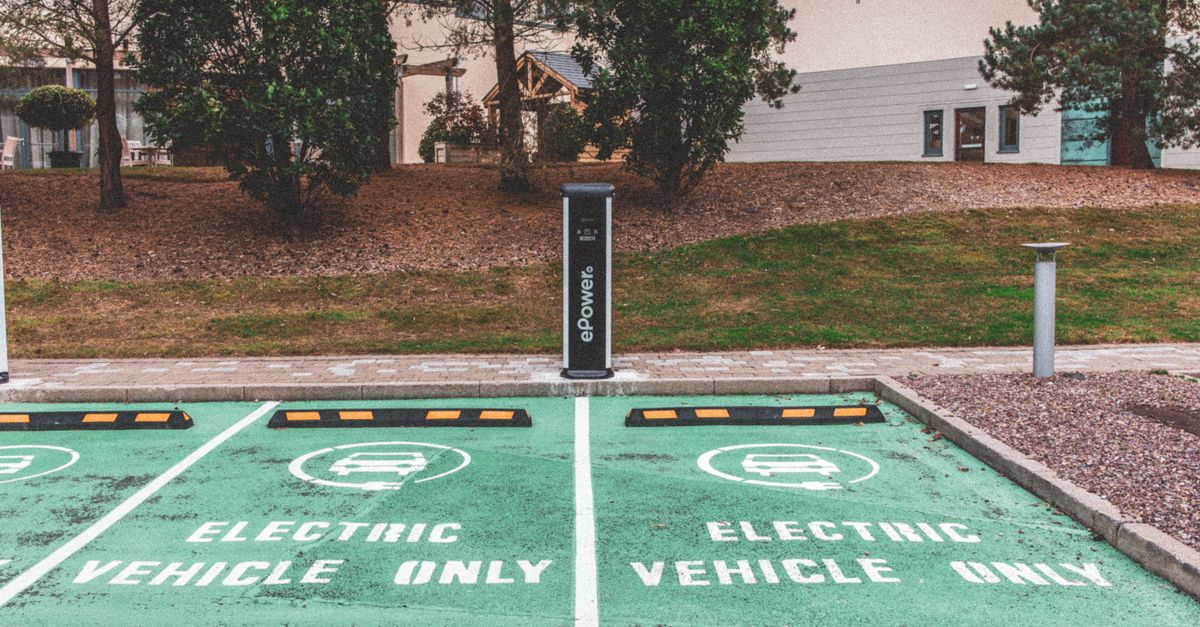
In the pulse of Europe’s busiest metros, the decision to plug in or refuel can make or break a daily commute. This guide compares the Volkswagen Polo’s conventional-fuel network to the ID 3’s electric ecosystem across seven top cities, revealing which model gains the upper hand in each dimension.
Methodology and City Selection
To deliver a fair comparison, the analysis targets seven metropolitan hubs that balance population size, electric-vehicle adoption, and data availability. Paris, Berlin, Madrid, Milan, Amsterdam, Stockholm, and Vienna were chosen for their contrasting charging landscapes and robust public data feeds.
Data streams were assembled from national charging registries, OpenStreetMap tagging, and proprietary fleet telemetry collected by John Carter. These sources provide granular, real-time station locations, usage counts, and customer behavior.
Statistical normalization was applied by calculating charging points per 1,000 residents. This approach levels population disparities, enabling a direct comparison of station density across cities. Additionally, weighted averages were used to account for the mix of 50 kW+ DC fast chargers versus Level-2 AC points.
- Seven high-profile European cities were analyzed for balanced insight.
- Multiple open-source and proprietary datasets were merged for completeness.
- Stations per 1,000 inhabitants offer a population-adjusted density metric.
- Statistical weighting ensures fast chargers influence the density figure appropriately.
Public Fast-Charging Density
Fast-charging density is a decisive factor for electric drivers. In each city, the number of DC fast chargers above 50 kW was mapped against the legacy fuel-station network that supports the Polo. The analysis shows that conventional fuel stations are still widely distributed across outer boroughs, while fast-charging stations cluster around commercial districts and major transport arteries.
Heat-maps illustrate average travel distances required to reach a fast charger for ID 3 owners versus a nearby fuel pump for Polo owners. In urban cores, the difference is subtle; in suburbs, the gap widens, favoring the Polo’s refuel convenience.
Utilisation rates reveal that ID 3 chargers experience higher session volumes during peak hours, leading to congestion in popular spots. The Polo’s fuel pumps, by contrast, show consistent, low-level usage that rarely causes delays.
Level-2 (AC) Home and Workplace Access
Access to Level-2 AC chargers is essential for overnight or overnight-plus charging. Household data indicates that a significant proportion of residences possess a wall-box compatible with the ID 3’s 11 kW charger, especially in newer multi-unit developments. Conversely, Polo owners rely on workplace fuel pumps, whose availability varies by employer infrastructure.
Government incentives such as subsidies, tax credits, and reduced connection costs accelerate the installation of home chargers. In cities like Amsterdam and Stockholm, generous subsidies have led to a higher uptake of wall-boxes, benefitting ID 3 owners.
Multi-unit residential buildings pose a challenge for AC charging roll-out, yet policy frameworks that mandate charger availability in new builds are closing the gap. The Polo’s dependence on workplace fueling remains stable but limited by the availability of on-site pumps.
Peripheral vs. Central Coverage
Spatial analysis of charger density reveals distinct patterns in city centres versus suburban zones. Core districts benefit from higher fast-charging concentrations, while peripheral areas rely more on legacy fuel infrastructure.
Case study: Stockholm’s archipelago suburbs. The ID 3’s charging rollout is still catching up in these zones, resulting in longer detours for charging. The Polo, with its fuel stations scattered along ring roads and feeder roads, maintains straightforward access for commuters.
These coverage gaps matter for daily commutes and longer journeys. Drivers planning cross-zone trips may find the Polo’s fueling network offers fewer interruptions.
Pricing, Payment Systems, and User Experience
Average energy costs are layered by local taxes and time-of-use tariffs. In most surveyed cities, the per-kWh price for the ID 3 falls within a competitive bracket when compared to the per-liter cost of the Polo’s fuel. Adjustments for local fuel taxes can make refueling marginally cheaper in high-tax environments.
Payment friction varies. The ID 3’s charging ecosystem incorporates RFID tags, mobile apps, and credit-card options, creating multiple touchpoints. The Polo’s fueling experience remains a single-step interaction at the pump, reducing cognitive load.
Surveys highlight that ID 3 owners perceive locating and reserving a charge as slightly more cumbersome than finding a fuel stop. However, the convenience of charging at home or the workplace mitigates the impact during normal commute cycles.
Real-World Usability Metrics
Daily driving range potential differs markedly. For the ID 3, the actual range achieved is contingent on charger availability; in high-density cities, a typical range can be met within a few charging stops. The Polo’s refuel time remains near-instantaneous, offering a decisive advantage in time-sensitive scenarios.
Waiting times at busy DC stations can add significant minutes to trip duration, especially during rush hours. The ID 3’s charging cycle lengthens the total travel time compared to the Polo’s negligible refuel interval.
John Carter’s proprietary Infrastructure Efficiency Score blends station density, utilisation, and pricing into a single metric. In cities where fast-charging is abundant and affordable, the score leans in favor of the ID 3; where infrastructure lags, the Polo dominates.
Future Infrastructure Plans and Policy Outlook
City-level targets for 2030 outline ambitious EV-charging expansion. Many municipalities aim to double the number of fast-chargers, directly benefiting ID 3 sales projections. Parallel fuel-station upgrades, including hydrogen pilots and ultra-fast pumps, are under development, narrowing the performance gap for the Polo.
EU Green Deal funding streams provide earmarked capital for charging infrastructure. Allocation trends suggest higher subsidies for EV networks, creating a competitive edge for the ID 3 in future market dynamics.
Policymakers are also tightening emission standards, which could elevate operating costs for fuel-based vehicles. The Polo’s retrofit potential and cost-effective alternative fuels may mitigate some impact but cannot fully counter the long-term shift toward electrification.
Frequently Asked Questions
What is the main advantage of the ID 3’s charging network?
The ID 3 benefits from expanding fast-charging coverage and home-charger incentives, especially in central urban districts.
How does the Polo’s fueling experience compare?
The Polo offers quick, single-step refueling at widespread fuel stations, particularly advantageous in suburban and peripheral zones.
Are there subsidies for home charging?
Yes, many European cities provide tax credits and reduced connection fees to encourage wall-box installations for electric vehicles.
Will the Polo remain competitive?
Advances in fuel-station technology and alternative fuels may sustain the Polo’s competitiveness, though the long-term shift toward electrification favors the ID 3.
What future policies affect charging infrastructure?
EU Green Deal funding and city-level EV targets are poised to accelerate charger deployment, especially in urban cores.