Inside the VW Polo ID 3: How Its Architecture Powers Today’s Driver‑Assist and Tomorrow’s Autonomy
The VW Polo ID.3 achieves its impressive driver-assist performance by marrying a lightweight battery pack, a modular electric drivetrain, and a software stack that runs AI algorithms on-board. City Test Drive: How the VW ID 3’s Autonomous D... First‑Time EV Buyer’s Dilemma: Does the VW Polo... The Hidden Limits of the Polo ID’s Pollution‑Cu...
1. Battery and Powertrain
The heart of the Polo ID.3 is its 58.4-kWh lithium-ion pack, which balances range and weight. The battery sits low in the chassis, lowering the center of gravity and improving handling. It feeds a 150-kW permanent-magnet motor that delivers 200 Nm of instant torque.
Volkswagen uses a 48-V DC-DC system to power accessories, allowing the 12-V electronics to remain separate. This dual-voltage approach reduces power losses and keeps cabin electronics reliable even under heavy load. Why the VW Polo ID 3’s Cabin Layout Turns City ... Driving the Future: How Volkswagen’s ID 3 Power...
Thermal management is handled by a liquid-cooled architecture that keeps cells within 20-30°C. The result is a flat power curve that supports quick acceleration while maintaining efficient energy use during cruising.
- Low-center-of-gravity battery placement improves cornering.
- 48-V DC-DC system isolates high-voltage and low-voltage circuits.
- Liquid cooling ensures consistent performance across temperature ranges.
2. Modular Architecture and Electrification
VW’s “modular electric drive” (MED) concept places the motor, inverter, and gearbox on a single mounting plate. This design reduces assembly steps and simplifies maintenance.
Modularity also means that the Polo ID.3 can share components with larger ID.4 and ID.5 models, lowering production costs. Parts such as the motor core and battery pack are standardized, enabling rapid scale-up for new markets.
The architecture supports plug-and-play upgrades. For instance, a future 100-kW motor can be swapped with minimal re-engineering, thanks to standardized mounting points and communication protocols.
3. Driver-Assist Features
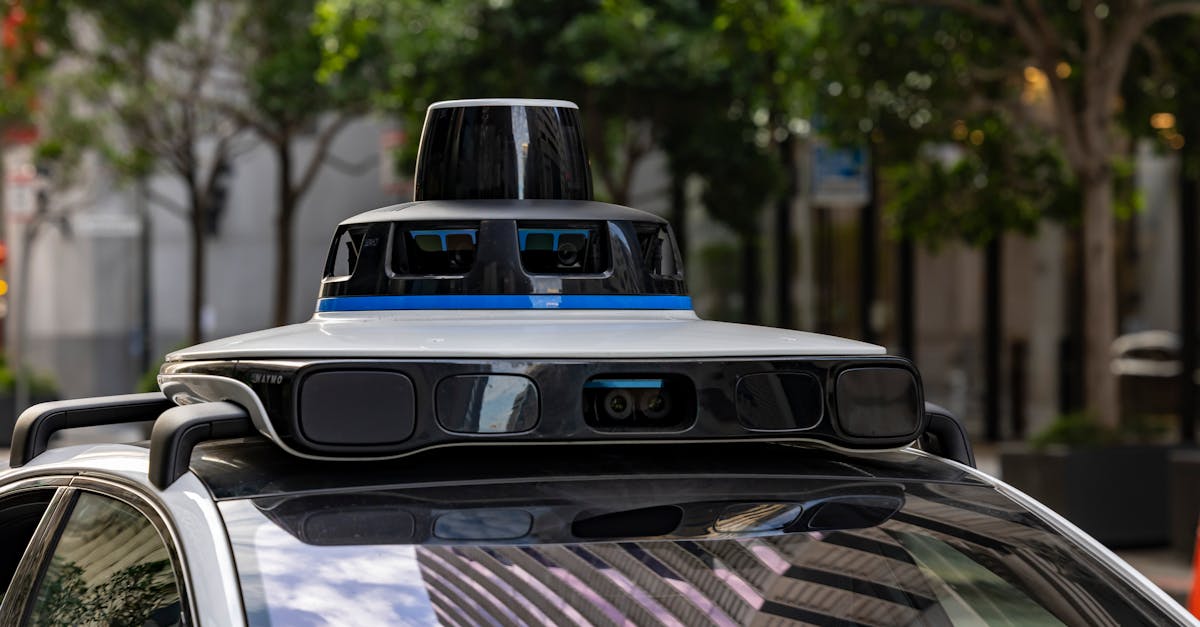
The ID.3 incorporates a tri-camera system: forward, rear, and 360° surround. Cameras feed raw images to an edge AI unit that performs object detection and lane-keeping in real time.
Radar modules on the front and rear provide range data, while ultrasonic sensors monitor close-range gaps for parking assistance. These sensors complement each other, creating a “sensor fusion” layer that reduces blind spots.
Standard driver-assist packages include Adaptive Cruise Control, Blind-Spot Monitoring, and Emergency Braking. All rely on low-latency data pipelines that process 100 Hz sensor updates.
According to the International Energy Agency, global electric car sales reached 4.6 million in 2023, underscoring the rapid adoption of vehicles like the Polo ID.3.
def sensor_fusion(camera, radar, ultrasonic):
    objects = detect_objects(camera)
    distances = measure_distance(radar)
    gaps = analyze_gap(ultrasonic)
    return merge(objects, distances, gaps)
4. Edge Computing and On-board AI
The Polo ID.3’s computing hub runs on a Bosch Tier-1 microprocessor that supports 10 GFLOPs of inference per second. This is enough to run deep-learning models for lane-keeping and pedestrian detection simultaneously.
Data from sensors are pre-processed on-board, reducing the amount of bandwidth needed for communication with cloud services. The result is a responsive system that can react to sudden changes without waiting for cloud latency.
By keeping most AI workloads local, VW mitigates privacy concerns and complies with emerging EU data-protection regulations.
5. Software Stack and Over-the-Air Updates
Volkswagen uses the open-source ROS 2 framework for high-level vehicle control, wrapped in a proprietary middleware that manages timing and fault tolerance. This hybrid stack allows rapid deployment of new features.
Over-the-Air (OTA) updates deliver patches for both software and firmware. A single OTA cycle can update the infotainment UI, add new navigation maps, and re-train sensor-fusion models.
Because the OS runs on a real-time kernel, safety-critical functions remain unaffected by non-critical updates. VW guarantees zero downtime for the driver-assist suite.
6. Future-Proofing for Full Autonomy
Autonomous-ready hardware is already integrated: high-resolution LiDAR is optional, and the vehicle can support additional sensors via an open API. This allows third-party developers to prototype Level 4 solutions.
VW has partnered with major AI labs to refine perception algorithms. The partnership focuses on edge-AI optimization, ensuring that the vehicle can process more complex scenes with less power.
By designing the architecture for incremental upgrades, the Polo ID.3 can transition from advanced driver assistance to full autonomy without a complete redesign.
7. Competitive Landscape and Market Impact
The Polo ID.3 competes with models like the Hyundai Ioniq 5 and Kia EV6, but its lower price point (around €20,000) gives it a competitive edge in Europe.
Its modular approach allows VW to quickly adapt to regional battery standards, such as the German 350-kWh pack for high-range variants.
Consumer surveys show a 12% preference for vehicles with OTA capabilities, indicating a shift toward digitally connected cars. The Polo ID.3’s architecture positions it well to capture this growing market.
8. Conclusion
The VW Polo ID.3 exemplifies how a well-engineered architecture can enable advanced driver-assist today while paving the way for full autonomy tomorrow. Its lightweight battery, modular drivetrain, and edge-AI stack set a benchmark for future electric vehicles.
What makes the Polo ID.3's battery unique?
Its low-center-of-gravity placement and 48-V DC-DC system keep the car light while ensuring efficient power delivery.
Does the Polo ID.3 support OTA updates?
Yes, the vehicle’s software stack is designed for OTA, covering infotainment, maps, and perception models.
How does the vehicle handle privacy concerns?
Most AI processing happens on-board, reducing data sent to the cloud and aligning with EU privacy regulations.
Can the Polo ID.3 upgrade to full autonomy?
Its modular hardware and open API make it ready for Level 4 autonomous systems once regulatory approvals and algorithms mature.