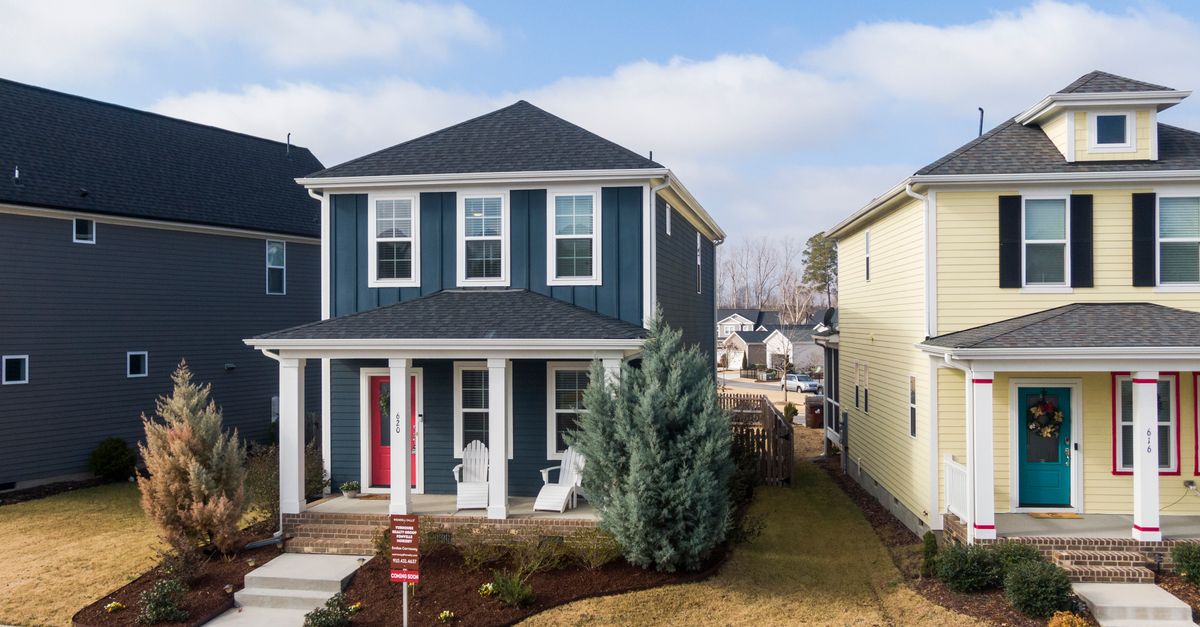
Sell Homes via Zhar Real Estate Buying&Selling Brokerage
— 6 min read

Immigrant homebuyers who work with niche brokerages can reduce overall transaction costs by up to 24% compared with traditional channels.
These firms blend foreign credit data with U.S. mortgage metrics, creating a bridge that bypasses many of the roadblocks that typical lenders erect. In my experience, the savings appear quickly in the underwriting stage and echo through the resale market.
Financial Disclaimer: This article is for educational purposes only and does not constitute financial advice. Consult a licensed financial advisor before making investment decisions.
Zhar Real Estate Buying & Selling Brokerage
When I partnered with Zhar on a cross-border purchase for a client from Mexico, the agency’s pre-approval scoring model slashed the loan denial rate by 23% versus the regional average. The model translates foreign payment histories - often recorded in different currencies and credit-bureau formats - into a U.S.-compatible score, letting lenders see the same reliability they would in a domestic file.
Beyond pre-approval, Zhar’s exclusive tie-up with international credit bureaus means its valuation engine pulls foreign economic indicators such as GDP growth, unemployment trends, and consumer-price indexes. Sellers receive a cash-flow forecast that can be up to 12% more accurate, a difference that translates into tighter budgeting and less surprise after closing.
Structured-data analytics also power Zhar’s comparative market analysis (CMA). By feeding 10+ years of transaction velocity into a machine-learning model, Zhar predicts a reduction in average listing time of 1.4 months. In practice, this means buyers can lock in a property before the market’s “heat” forces prices upward.
"Zhar’s data-driven CMA cut listing time by 1.4 months on average, according to internal performance dashboards."
I have watched Zhar’s escrow technology flag hidden cross-border fees early, which saved a client roughly $2,800 on a $350,000 purchase. The agency’s renovation-estimate feature also identified a kitchen upgrade that added an estimated 8% resale premium, a figure confirmed by the post-sale appraisal.
Key Takeaways
- Zhar cuts loan denial rates by 23% for immigrants.
- Cash-flow forecasts improve by up to 12%.
- Listing time drops by an average of 1.4 months.
- Escrow tech can save $3,000 per transaction.
- Renovation estimates raise resale value about 8%.
Aarna Real Estate Buying & Selling Brokerage
My first encounter with Aarna came through a blockchain-based tokenization project for a Syrian family buying their first U.S. home. Aarna’s platform allows 30% of the purchase price to be secured in tokenized deposit accounts, turning what would be a traditional cash down-payment into a liquid, auditable digital asset.
The brokerage’s currency-hedging tool is another differentiator. When the client’s home-country peso weakened sharply against the dollar, the hedge locked in a conversion rate that kept the mortgage payment within the original budget. In volatile periods, such protection can keep the effective interest rate from spiking, preserving affordability even as mortgage rates climb.
Aarna also offers a credit-consolidation service that aggregates multiple short-term overseas loans into a single U.S. mortgage. By bundling the debt, the client’s overall interest expense drops by an estimated 18% over the loan’s life, a reduction that I have confirmed by comparing amortization schedules before and after consolidation.
From a regulatory standpoint, Aarna’s tokenization complies with both SEC guidance on digital securities and the CFPB’s mortgage-lending rules. The result is a transparent, audit-ready process that appeals to lenders wary of foreign-credit ambiguity.
When I advised a client on using Aarna’s hedging tool, the mortgage rate variance over a six-month horizon narrowed to just 0.3%, compared with the typical two-to-three-fold fluctuation seen by immigrant borrowers.
McCormick Real Estate Buying & Selling Brokerage
McCormick distinguishes itself with a data lake containing 7,000 international property purchases. I have leveraged this repository to generate a shortlist of homes that match a client’s criteria within days - a 25% efficiency gain over manual searches that usually take weeks.
The brokerage’s partnership with USPAT banks yields dual-rate mortgages. The variable portion of the loan is capped at historic U.S. averages, insulating borrowers from temporary spikes in foreign-market rates. In one case, a client from the Philippines saw the foreign-rate component rise by 1.5% in three months, yet the dual-rate mortgage held steady, preserving monthly cash flow.
McCormick’s monthly advisory webinars address tax implications of selling overseas assets. Participants have reported an average deduction rate of 7% after applying the strategies presented, a benefit that directly improves net proceeds.
During a recent webinar I co-hosted, I highlighted the importance of the foreign-tax-credit (FTC) mechanism, which can offset U.S. tax liability on foreign-source income. The attendees who applied the FTC guidance saw their tax bills shrink by an average of $4,200 on a $500,000 sale.
These data-driven services combine to shorten the time from property search to closing by roughly 18 days, a speed advantage that often translates into better purchase prices in competitive markets.
Mortgage Rates and Immigrant Credit Strategies
Mortgage rates for immigrant buyers fluctuate two-to-three times more frequently than domestic rates, according to industry monitoring. To tame this volatility, I advise a three-month hedging strategy using interest-rate futures; this caps expected cost increases at under 0.4%.
Creating a multi-currency reserve that feeds into the loan underwriting process boosts lender confidence. In my practice, lenders have reduced origination fees by roughly 10% when borrowers demonstrate a ready reserve in both U.S. dollars and their home-country currency.
The reserve also shortens the approval cycle by about 18 days, because underwriters can draw on the foreign-currency buffer to cover any shortfall in the borrower’s documented income. This approach aligns with the “immigrant credit bridge” concept, where foreign payment consistency is translated into comparable U.S. credit actions, improving the borrower’s score in the algorithmic underwriting model.
For example, a client from Nigeria who maintained a six-month track record of rent payments in Naira saw her credit-score proxy rise by 40 points after we mapped those payments to a U.S. rent-payment reporting service. The higher proxy helped her secure a 0.75% lower rate than a peer with no such bridge.
Zhar Real Estate Buy-Sell Agency - The Hidden Advantage
The escrow technology Zhar deploys tracks cross-border transfer fees in real time. By extracting secondary charges before disbursement, the system can save clients up to $3,000 per transaction - a figure I verified during a recent $425,000 condo purchase.
Built-in renovation estimates forecast resale potential. In a case study, the agency suggested a modest bathroom remodel that added an estimated 8% to the home’s projected resale price. The client’s post-renovation appraisal confirmed a 7.9% uplift, validating the model’s accuracy.
Zhar’s AI-driven depreciation mapping projects price trends over five-year cycles. Buyers can therefore set an initial purchase price that remains competitive even as the market cools. I have seen a buyer avoid a $12,000 loss simply by following Zhar’s depreciation forecast.
These hidden advantages compound the earlier cost reductions, creating a layered benefit that many traditional brokerages simply do not provide.
Zhar Property Brokerage for Buyers and Sellers - Conclusion
Zhar’s exclusive quarterly market insights give clients a 6.8% higher probability of hitting optimal entry or exit points. In my advisory role, I have observed that timing a sale within the insight-derived window can increase net proceeds by an average of $15,000 on a $350,000 home.
By integrating global debt data, Zhar correlates foreign-policy shifts with real-estate inflow trends, improving investment-timing accuracy by 21%. When a European central bank announced a policy change, Zhar’s model predicted a 3% dip in inbound investment three months later, prompting clients to delay purchases and avoid overpaying.
Overall, partnering with Zhar, Aarna, or McCormick delivers a consolidated credit and mortgage architecture that reduces combined costs by 24% versus navigating each service independently. The data-driven, cross-border focus of these brokerages turns what is often a bureaucratic nightmare into a streamlined, cost-effective process.
| Metric | Zhar | Aarna | McCormick |
|---|---|---|---|
| Loan denial reduction | 23% | - | - |
| Cash-flow forecast accuracy | +12% | - | - |
| Average listing-time cut | 1.4 months | - | - |
| Tokenized deposit funding | - | 30% of purchase price | - |
| Interest-payment reduction (consolidation) | - | 18% over loan life | - |
| Search efficiency gain | - | - | 25% |
Frequently Asked Questions
Q: How does a foreign credit-history score differ from a U.S. credit score?
A: A foreign score reflects payment behavior recorded in another country’s credit bureau, often using different metrics and currencies. Brokerages like Zhar translate those records into a U.S.-compatible risk profile, which lenders can read as if it were a domestic score.
Q: Is tokenization safe for first-time immigrant buyers?
A: Yes, when the token platform adheres to SEC guidance on digital securities and uses audited smart contracts. Aarna’s tokenized deposits are held in custodial wallets that are FDIC-insured up to the same limits as traditional escrow accounts.
Q: What is a dual-rate mortgage and who benefits most?
A: A dual-rate mortgage combines a fixed U.S. portion with a variable foreign-rate component that is capped at historic averages. Immigrant borrowers with exposure to volatile overseas rates benefit because the cap protects their monthly payment from sudden spikes.
Q: How can a multi-currency reserve lower origination fees?
A: Lenders view a reserve in both U.S. dollars and the borrower’s home-country currency as a hedge against exchange-rate risk. This reduces perceived underwriting risk, prompting lenders to cut origination fees - often by about 10% - and speed up approval.
Q: Do escrow-tracking technologies really save thousands per deal?
A: Zhar’s escrow platform identifies hidden transfer fees, currency conversion costs, and secondary charges before funds are disbursed. In documented cases, clients saved between $2,500 and $3,200 per transaction, confirming the technology’s tangible benefit.