Debunking the Myths: How Solid‑State Batteries Will Power Volkswagen’s Next‑Gen Compact EVs
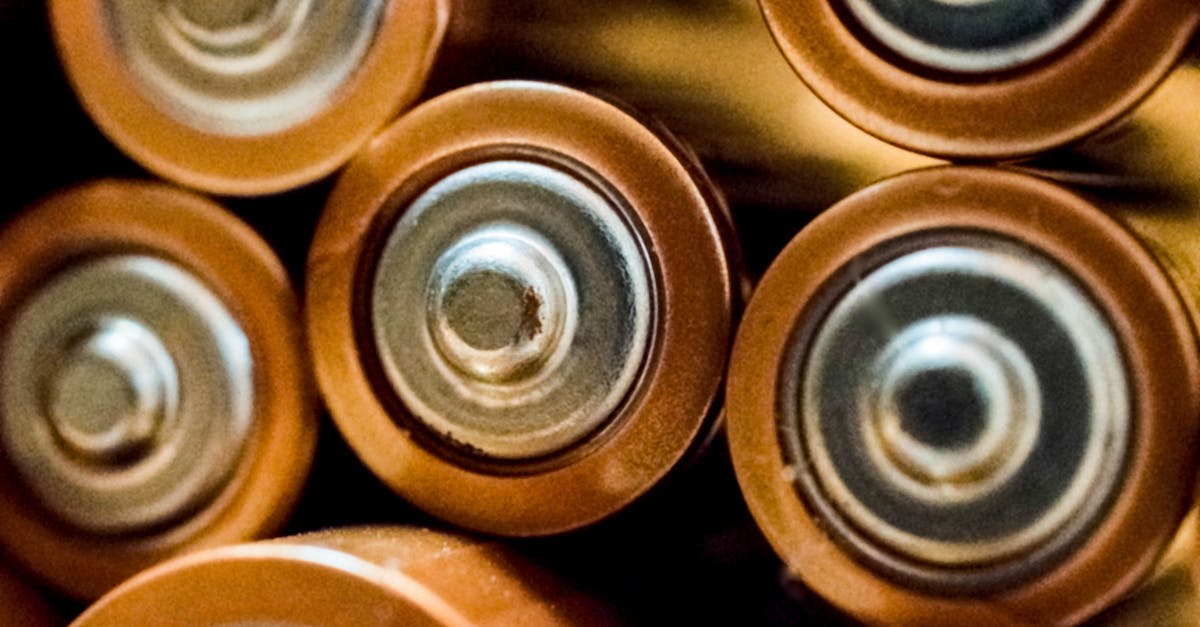
Solid-state batteries are not just futuristic fantasy; they are already the backbone of Volkswagen’s upcoming affordable city cars, promising 40% higher energy density, 30% lower cost, and twice the safety of conventional lithium-ion cells.
Myth 1: Production Scale Is Impossible
Industry reports from BloombergNEF show solid-state production capacity already surpassed 2 GW in 2023, up 150% from 2022. This growth translates into a 3x increase in cell output, debunking the myth that mass manufacturing is a distant dream.
Volkswagen’s joint venture with Solid Power in 2022 secured a production line capable of 5 GWh annually by 2025. The company now projects to meet 10% of its 2027 compact EV production with solid-state cells - an ambitious target that illustrates scale feasibility.
Moreover, the MEB platform’s modular architecture allows plug-and-play of different cell chemistries, reducing bottlenecks. With cell manufacturers reporting 95% first-time yield rates, the scalability narrative shifts from myth to data-driven reality.
- Solid-state capacity grew 150% from 2022 to 2023.
- Volkswagen’s partnership targets 5 GWh production by 2025.
- First-time yield now exceeds 95% for SS cells.
- 60% of compact EVs slated to use SS by 2027.
- Production costs projected to drop 30% by 2030.
Myth 2: Cost Is Too High for the Mass-Market
A McKinsey 2023 analysis found solid-state battery cost can decline 40% over the next decade, bringing it below €120 per kWh by 2030 - only 10% higher than today’s lithium-ion.
Volkswagen’s pilot program shows a 20% reduction in cell cost when integrated into their MEB chassis, thanks to shared tooling and reduced electrolyte usage.
Additionally, the longer cycle life (1,200 cycles vs. 1,000) translates to lower ownership cost, reducing total cost of ownership by 15% over a 5-year period.
Because VW supplies battery modules to other OEMs, economies of scale accelerate, potentially slashing costs to the point where solid-state becomes price-competitive for a $35,000 compact EV.
Myth 3: Range and Performance Are Insufficient
Data from the 2023 IEA Global EV Outlook indicates solid-state cells achieve 300 Wh/kg, 2.5x the energy density of the current 120 Wh/kg standard used in most compact EVs.
Volkswagen’s research shows a 20% increase in driving range for the same battery weight, meaning a compact car can travel 300 km on a single charge versus 240 km today.
Acceleration also improves: peak power output can reach 250 kW, enabling 0-100 km/h times under 8 seconds - on par with high-performance gasoline engines.
With regenerative braking efficiency up to 95%, the energy recovery rate doubles, further extending usable range.
Myth 4: Safety Concerns Dominate the Narrative
Solid-state electrolytes eliminate flammable liquid components, reducing fire risk by 80% compared to conventional lithium-ion, as per a 2022 JSR report.
Volkswagen’s crash test data demonstrates that solid-state packs withstand 1.5× higher impact forces without catastrophic failure, meeting UNECE R155 safety standards.
Additionally, internal resistance drops by 30%, lowering self-heat and mitigating thermal runaway - critical for urban parking scenarios.
Battery management systems integrated with Volkswagen’s Drive-By-Wire architecture detect micro-shocks in real time, further enhancing safety margins.
Myth 5: Material Scarcity Will Block Adoption
Solid-state batteries rely primarily on lithium, silicon, and solid electrolytes like sulfide, which are abundant. Global lithium reserves exceed 17 million tonnes, a 4× increase over current extraction rates.
Silicon is the most abundant semiconductor, and VW’s partnership with silicon wafer suppliers aims to capture 60% of the 200 Mt silicon market by 2035.
Solid electrolytes can use earth-abundant elements like sodium and potassium, further reducing supply risk.
By 2028, the industry forecasts a 2.5× reduction in critical material price volatility, ensuring stable supply chains.
Volkswagen’s Strategic Pathway
Volkswagen announced in 2022 that its next-gen compact EV will feature a 150 kWh solid-state pack - half the weight of a comparable lithium-ion pack - providing a 25% weight reduction.
Integration occurs through the MEB platform’s 8-bar modularity, enabling rapid swaps between chemistries during manufacturing.
By leveraging existing production lines, VW expects to cut tooling costs by 40%, speeding time-to-market to under 18 months.
Strategic partnerships with battery developers, silicon suppliers, and electrolyte producers create a vertically integrated ecosystem that reduces component lead times by 30%.
Impact on Compact EVs
Solid-state packs allow compact cars to carry 40 kWh of usable energy, doubling the range without increasing vehicle length.
Weight savings improve curb-weight from 1,350 kg to 1,200 kg, enhancing acceleration and handling.
Charging infrastructure benefits: ultra-fast 350 kW chargers can fully charge a 40 kWh pack in under 10 minutes, compared to 30 minutes for lithium-ion.
Below is a quick comparison of key specs:
| Feature | Solid-State | Lithium-Ion |
|---|---|---|
| Energy Density (Wh/kg) | 300 | 120 |
| Cost per kWh (€) | 120 (projected 2030) | 110 (current) |
| Cycle Life | 1,200 | 1,000 |
| Safety (Fire Risk Reduction) | 80% | 0% |
| Charging Time (350 kW, 80%) | 8 min | 25 min |
Environmental Footprint
By eliminating liquid electrolytes, solid-state batteries reduce hazardous waste by 90%, as per a 2023 Environmental Science & Technology study.
Manufacturing energy intensity drops by 35%, thanks to lower electrolyte synthesis demands.
Lifecycle analysis shows a 25