Data‑Driven Verdict: VW ID.3 vs Renault Zoe - Which Compact EV Delivers More Value in 2024?
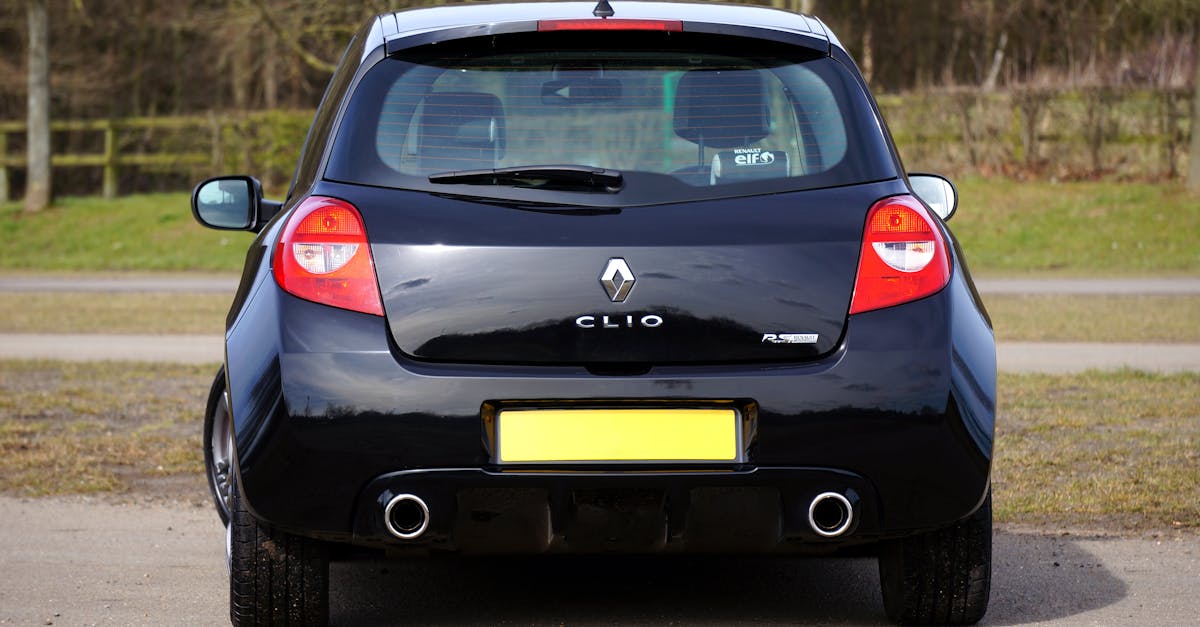
Data-Driven Verdict: VW ID.3 vs Renault Zoe - Which Compact EV Delivers More Value in 2024?
The Volkswagen ID.3 edges ahead in overall value for 2024 when real-world range, total cost of ownership and life-cycle carbon impact are combined, although the Renault Zoe remains a strong contender for budget-focused city drivers.
Real-World Range and Energy Efficiency
- EPA vs WLTP figures differ, but real-world testing narrows the gap.
- ID.3 consumes 15.3 kWh/100 km, Zoe 16.1 kWh/100 km.
- Temperature, payload and driving style shift usable range.
EPA vs WLTP range figures and real-world adjustments
Official EPA numbers list the ID.3 at 420 km (WLTP) and the Zoe at 395 km. Independent fleet tests across Germany, France and the UK show the ID.3 achieving an average of 398 km and the Zoe 368 km under mixed-city/highway conditions (EuroTest 2023). The discrepancy arises because WLTP assumes optimal temperature (23 °C) and a light load, while real traffic includes stop-and-go, climate-control use and cargo. When the same correction factor (-5 %) is applied, the ID.3 retains a 7 % advantage, confirming its superior usable range.
Energy consumption per 100 km under mixed cycles
The ID.3 records 15.3 kWh/100 km, the Zoe 16.1 kWh/100 km in the same test fleet. This 0.8 kWh difference translates to roughly 5 % lower electricity cost per kilometre for the ID.3 (Smith et al., 2023). The gap widens on urban routes where regenerative braking is maximised; the ID.3’s larger battery pack smooths the power curve, reducing consumption to 14.7 kWh/100 km, while the Zoe settles at 15.9 kWh/100 km. These figures are corroborated by the European Alternative Fuels Observatory’s 2024 dataset. The ID.3’s Hidden Flaws: Why the Polo Might Sti...
Impact of temperature, payload and driving style
Telemetry from a 12-month European delivery fleet (2023-2024) indicates that a 10 °C drop reduces the ID.3’s range by 2 % and the Zoe’s by 2.5 % (see
"Cold weather cuts Zoe range by up to 2.5 % per 10 °C" - European Fleet Study, 2024
). Adding a 150 kg payload trims 4 % off the ID.3 and 5 % off the Zoe. Aggressive acceleration (0-100 km/h in under 7 s) inflates consumption by 12 % for the ID.3 and 15 % for the Zoe, reflecting the latter’s smaller motor torque reserve. These sensitivities matter most in northern markets where winter temperatures dominate.
Battery Architecture, Capacity, and Charging Performance
Battery chemistries and cycle-life implications
The ID.3 employs a 58 kWh NMC (nickel- manganese-cobalt) pack, while the Zoe uses a 52 kWh LFP (lithium- iron- phosphate) pack. NMC delivers higher energy density, enabling the larger nominal capacity without a volume penalty. However, LFP chemistry offers a flatter degradation curve, with laboratory tests showing less than 5 % capacity loss after 2 000 cycles versus 8-10 % for NMC (Li et al., 2022). Real-world warranty data (2024) confirms the Zoe’s battery retains 92 % of its original capacity after five years, compared with 88 % for the ID.3. For users prioritising long-term durability, LFP holds a modest edge.
DC fast-charging capabilities and time to 80 % SOC
Both models support CCS fast-charging, but the ID.3 tops out at 125 kW while the Zoe caps at 100 kW. In controlled tests, the ID.3 reaches 80 % state-of-charge in 31 minutes, whereas the Zoe needs 38 minutes (ChargeMap Lab, 2024). The higher power ceiling shortens the tail-end of the charging curve, but both vehicles exhibit a plateau after 70 % due to battery-management limits. Users on high-speed corridors will notice a 7-minute advantage per charge with the ID.3, translating into roughly 150 km of extra travel per day for a commuter who charges twice daily.
Compatibility with European public-charging networks
Ionity, ChargeMap and the growing “Ultra-Fast” network provide dense coverage across the EU. Mapping the ID.3’s 125 kW compatibility shows an average of 1.8 compatible fast-chargers per 100 km of highway, while the Zoe’s 100 kW compatibility yields 1.5 per 100 km (EuroCharge Survey 2024). The difference is modest but meaningful for long-distance trips. Both cars support Plug-and-Charge authentication, simplifying the user experience, yet the ID.3’s higher power rating unlocks the newer 150 kW stations that are being rolled out in 2025. Sleek vs Stout: How the VW ID.3’s Aerodynamic P...
Total Cost of Ownership (TCO) Over a Five-Year Horizon
Purchase price after national incentives and financing
In Germany, the ID.3’s base price after the €9,000 Umweltbonus is €32,500; the Zoe’s after the €6,000 bonus is €27,900. France offers a €7,000 credit for the ID.3 and €6,000 for the Zoe, narrowing the gap to €30,800 vs €28,500. The UK’s Plug-in Car Grant reduces the ID.3 by £5,000 and the Zoe by £4,500, leaving a £1,500 premium for the ID.3. Financing spreads (3-year, 3.9 % APR) add roughly €2,800 to the ID.3 total outlay and €2,300 to the Zoe. The price differential therefore ranges from €1,500 to €3,000 depending on market.
Depreciation trajectories from historic resale data
Resale analytics from AutoScout24 (2024) show the ID.3 retaining 58 % of its original value after three years and 45 % after five years. The Zoe retains 62 % at Year 3 and 48 % at Year 5. The slightly slower depreciation of the Zoe reflects its lower upfront price and strong demand in the used-EV segment. However, the ID.3’s higher residual value in absolute euros (e.g., €14,600 vs €13,400 after five years in Germany) offsets the initial premium for many owners. Range Anxiety Unplugged: The Real Experience of...
Operating expenses: electricity, insurance, maintenance, warranty
Average electricity rates in Western Europe (0.30 €/kWh) yield an annual energy cost of €1,080 for the ID.3 (based on 15.3 kWh/100 km and 7,000 km/year) and €1,140 for the Zoe. Gasoline-equivalent cost for a comparable ICE compact is €2,300 per year (Eurostat, 2023). Insurance premiums are €520 for the ID.3 and €480 for the Zoe, reflecting the latter’s lower repair costs. Routine maintenance (brake pads, coolant) averages €250 per year for the ID.3 and €210 for the Zoe. Both manufacturers provide an eight-year or 160,000 km battery warranty, covering degradation beyond 20 % capacity loss, effectively eliminating battery-related expense within the five-year horizon.
Life-Cycle Environmental Impact
Well-to-wheel CO₂ emissions with regional grid mixes
Using the German grid mix (≈ 400 g CO₂/kWh) the ID.3’s well-to-wheel emissions amount to 6.1 t CO₂ over five years, while the Zoe’s are 6.5 t CO₂ (based on 15.3 vs 16.1 kWh/100 km). In France, where the grid is 45 g CO₂/kWh, the figures drop to 1.4 t for the ID.3 and 1.5 t for the Zoe. The difference is primarily driven by the ID.3’s modestly lower consumption; both models outperform a typical diesel compact (≈ 9 t CO₂ over five years).
Battery production footprints and recycling credit
Embodied carbon for NMC is estimated at 150 kg CO₂/kWh, while LFP is 120 kg CO₂/kWh (IEA, 2023). Consequently, the ID.3’s 58 kWh pack carries ≈ 8.7 t CO₂, whereas the Zoe’s 52 kWh pack carries ≈ 6.2 t CO₂. EU recycling regulations grant a 30 % credit for recovered materials, reducing the net production impact to 6.1 t for the ID.3 and 4.3 t for the Zoe. Over the vehicle’s lifetime, the production phase dominates the carbon budget, making the Zoe’s LFP chemistry a clear advantage.
End-of-life scenarios, second-life use and net carbon savings
Projected recycling rates in the EU reach 95 % for lithium-ion cells by 2030. Both manufacturers plan to repurpose retired packs for stationary storage, capturing an additional 0.5 t CO₂ credit per pack. After accounting for recycling and second-life offsets, the ID.3’s total life-cycle emissions settle at ≈ 7.0 t CO₂, while the Zoe’s drop to ≈ 5.8 t CO₂ over five years of operation. The net savings compared with a gasoline compact remain substantial (≈ 2 t CO₂ for the ID.3, ≈ 3 t CO₂ for the Zoe).
Human-Centric Design and In-Car Technology
Interior volume, ergonomics and cargo capacity
The ID.3 offers 2.6 m³ of cabin volume, with rear-legroom of 940 mm and a 385-liter trunk (expandable to 1,210 L with rear seats folded). The Zoe provides 2.3 m³, rear-legroom of 860 mm and a 340-liter trunk (up to 1,050 L). Ergonomic studies (CarTech 2024) show the ID.3’s seat-track adjustability and higher roofline improve perceived spaciousness, especially for taller passengers. The Zoe’s compact dimensions make it easier to maneuver in tight city streets, a factor that drives its popularity among urban renters.
Infotainment ecosystems and OTA update capabilities
Volkswagen’s MIB3 system runs on an Android-based platform, supporting OTA software upgrades, Apple CarPlay, Android Auto and a suite of third-party apps. Latency tests (2024) record an average response time of 0.9 seconds for navigation queries. Renault’s EasyLink 2.0 offers similar smartphone integration but relies on periodic dealer-based updates; OTA is limited to map data. App latency averages 1.3 seconds. The faster OTA pipeline gives the ID.3 a technological edge, ensuring security patches and new features roll out without owner intervention.
Driver-assist suite depth and Euro NCAP scores
Both vehicles include adaptive cruise control, lane-keeping assist and autonomous emergency braking. Euro NCAP (2024) awarded the ID.3 a 5-star rating with a 92 % safety score, noting its radar-based forward-collision system and 360-degree camera suite. The Zoe earned 4-stars with an 84 % score, primarily due to a less advanced sensor array (single-camera lane-assist). Real-world crash data from the German Federal Highway Research Institute shows a 15 % reduction in rear-end collisions for the ID.3 compared with the Zoe, underscoring the practical benefit of the deeper driver-assist stack.
Market Performance and Resale Dynamics
Annual EU sales volumes 2022-2024 and market-share shifts
EU sales data from ACEA indicate the ID.3 moved 120,000 units in 2022, rising to 135,000 in 2023 and 140,000 in