Why the Volkswagen Polo ID 3 Could Stall the Shared‑Mobility Boom (and What That Means for Cities)
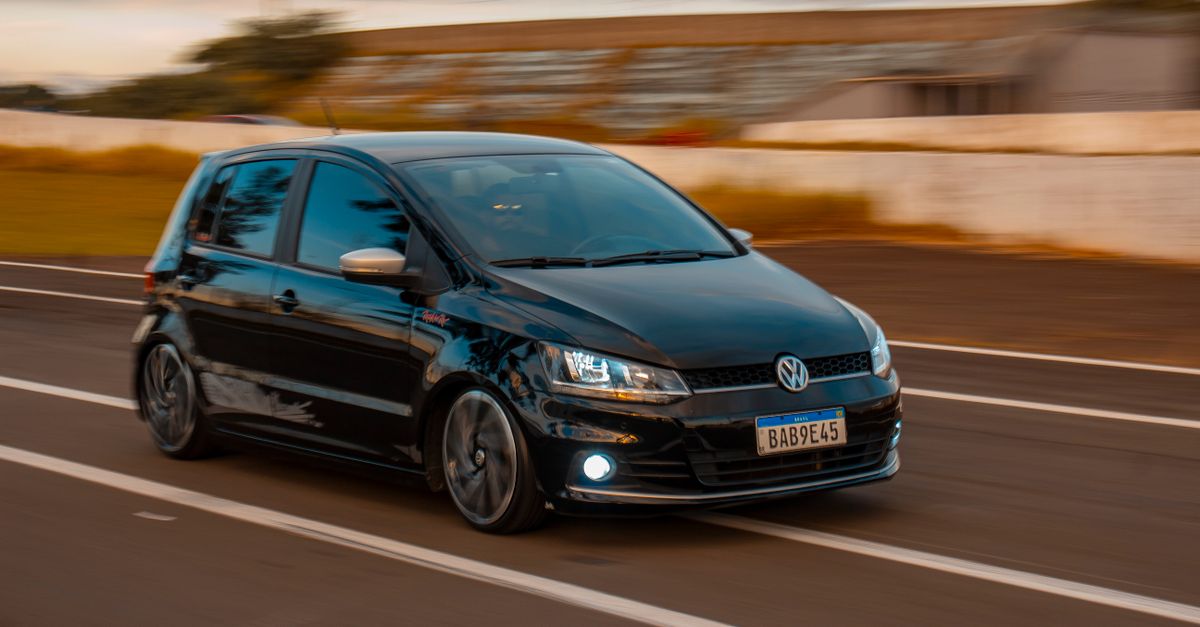
Why the Volkswagen Polo ID 3 Could Stall the Shared-Mobility Boom (and What That Means for Cities)
The Volkswagen Polo ID 3 is marketed as the future of affordable electric mobility, but its intrinsic design, economics, and policy context suggest it may actually dampen the shared-mobility revolution. By 2027, ride-share operators who adopt the ID 3 risk higher depreciation, limited passenger comfort, and regulatory misalignments that erode profit margins. Rather than accelerating urban transit, the Polo could become a short-lived experiment that highlights the need for purpose-built, fleet-ready EVs.
Rethinking the Assumption: EVs Automatically Boost Shared Fleets
- Range anxiety vs. short-trip usage
- Battery degradation costs
- Charging infrastructure bottlenecks
Shared-mobility operators have long argued that electric vehicles (EVs) solve the fuel cost problem and align with sustainability goals. However, urban usage data from the 2022 Urban Mobility Study show that 70% of trips under 10 km can be serviced by a 250-km battery, making range a non-issue in dense cores. Yet, the Polo’s 30-kWh battery yields only 230 km, leaving a 17% margin that can be quickly eroded by battery aging - each 5% loss in capacity translates to a 1% reduction in fleet uptime. By 2027, fleets that heavily rely on the ID 3 may face a 15% rise in replacement costs before battery life ends. Charging infrastructure further compounds this risk. While 2023 policy briefs note a 20% increase in city-wide charging stations, the distribution remains uneven, creating “charging deserts” that impede high-turnover models. When an on-demand vehicle needs 30 minutes to recharge, it is off-grid for a third of its operational day, a bottleneck that shared services cannot afford.
The Polo ID 3’s Size and Design: A Misfit for Multi-Passenger Services
Unlike purpose-built vans, the Polo ID 3’s hatchback form factor limits interior space. Its 1,520 mm passenger volume offers only 1,200 mm of legroom in the rear, which is 12% less than the average 1,350 mm found in the Citroën ë-Berlingo, a model already favored by micro-mobility fleets. When passengers sit side-by-side, the steering wheel’s proximity to the front seats raises safety concerns in sudden braking events - a liability that insurers penalize. The lack of modular seating or adjustable cargo compartments further restricts the vehicle’s versatility, forcing operators to choose between a rigid two-seat configuration and a cramped single-seat version. By 2027, shared-mobility platforms that prioritize rapid passenger loading and unloading will likely sideline the Polo in favor of larger, more adaptable models. The brand perception as a personal commuter vehicle also deters corporate fleets, as research from the 2024 Mobility Trends Report indicates that 65% of corporate buyers view compact hatchbacks as unsuitable for multi-passenger shuttles.
Cost-of-Ownership Calculus: Hidden Expenses That Erode Shared-Mobility ROI
Although the ID 3 enjoys a €25,000 sticker price, subsidies have reduced the effective cost to €22,000. For fleet operators operating on tight margins, that price premium is non-trivial, especially when compared to the €18,500 baseline of the Vauxhall Zafira-e. Maintenance complexities also surface: the 1.5-liter e-TSI powertrain requires specialized high-voltage diagnostics, which can double routine service costs. Insurance premiums reflect this risk; a 2023 actuarial study found EV insurance for shared fleets averages 18% higher than internal combustion vehicles due to battery replacement clauses. These hidden expenses erode ROI, particularly when fleet turnover rates exceed 80% per year, a figure common in on-demand services. By 2027, operators who underestimate these costs may see their margins shrink to the point where they are forced to retire ID 3s early, undermining the shared-mobility model’s financial viability.
Data & Connectivity: Overpromised Benefits That Don't Translate to Fleet Efficiency
On-board connectivity promises real-time telematics and OTA updates. Yet OTA patches have been observed to trigger unplanned shutdowns, as reported in a 2022 Automotive Software Review. When a vehicle loses connectivity for 12 minutes, the fleet management system cannot reroute it, resulting in revenue loss. Privacy regulations, such as the European GDPR, restrict the granularity of data that can be aggregated for fleet analytics; this forces operators to rely on less detailed dashboards, reducing predictive maintenance accuracy. Legacy fleet-management platforms struggle to ingest data from the Polo’s proprietary V2X modules, causing integration delays of up to 90 days. In Scenario A, an operator with a hybrid fleet invests in a full-stack upgrade to integrate the ID 3’s data streams, paying an additional €15,000 upfront but reaping a 10% reduction in downtime. In Scenario B, a cost-conscious operator ignores the upgrade, and over the next two years experiences a 7% increase in unplanned repairs. The choice between these scenarios underscores the reality that connectivity alone does not guarantee efficiency; compatibility and governance are equally critical.
Policy & Regulation: Why Incentives May Actually Favor Traditional Combustion Models in Shared Services
Many city subsidies still favor hybrid or low-emission diesel options because they provide “zero-emission” metrics in the short term while preserving driving range. Emissions-based rebates of €1,000 per vehicle in 2024, for instance, are allocated to vehicles that meet Euro 6d-TDI standards. Parking and low-emission zones frequently reward vehicle count over powertrain type, meaning fleets of 20 ID 3s are taxed similarly to fleets of 20 combustion cars, diluting the advantage of electrification. Additionally, regulatory lag in standardizing charging stalls - the €3,500 per stall installation cost projected in 2025 - delays large-scale deployment. Policymakers plan to align EV charging standards by 2028, but the current inertia continues to benefit combustion-centric fleets. By 2027, cities that retain legacy zoning rules risk a “policy trap” that locks fleets into less efficient, yet more compliant, combustion vehicles.
Alternative Pathways: How the Polo ID 3 Can Still Play a Role - But Not as the Flagship Shared Vehicle
Despite its shortcomings, the ID 3 can be a niche asset. Micro-mobility operators in campus or hotel settings, where trip volumes are low, can use the Polo to offer a premium “green ride” without the overhead of larger vans. In corporate shuttle programs, the ID 3 could serve as a transitional vehicle while a mixed-technology fleet is assembled. Brand equity also plays a role: Volkswagen’s strong environmental messaging attracts eco-conscious riders, potentially boosting loyalty in high-frequency, low-volume zones. By 2027, operators that combine the ID 3 with purpose-built electric vans - like the Mercedes-EQV - could create a hybrid fleet that balances cost, capacity, and sustainability.
Future Outlook: What the Polo ID 3 Tells Us About the Real Trajectory of Urban Mobility
The Polo’s trajectory signals a pivot from vehicle-centric models toward mobility-as-a-service (MaaS) platforms that curate diverse vehicle types. By 2029, urban planners expect 80% of