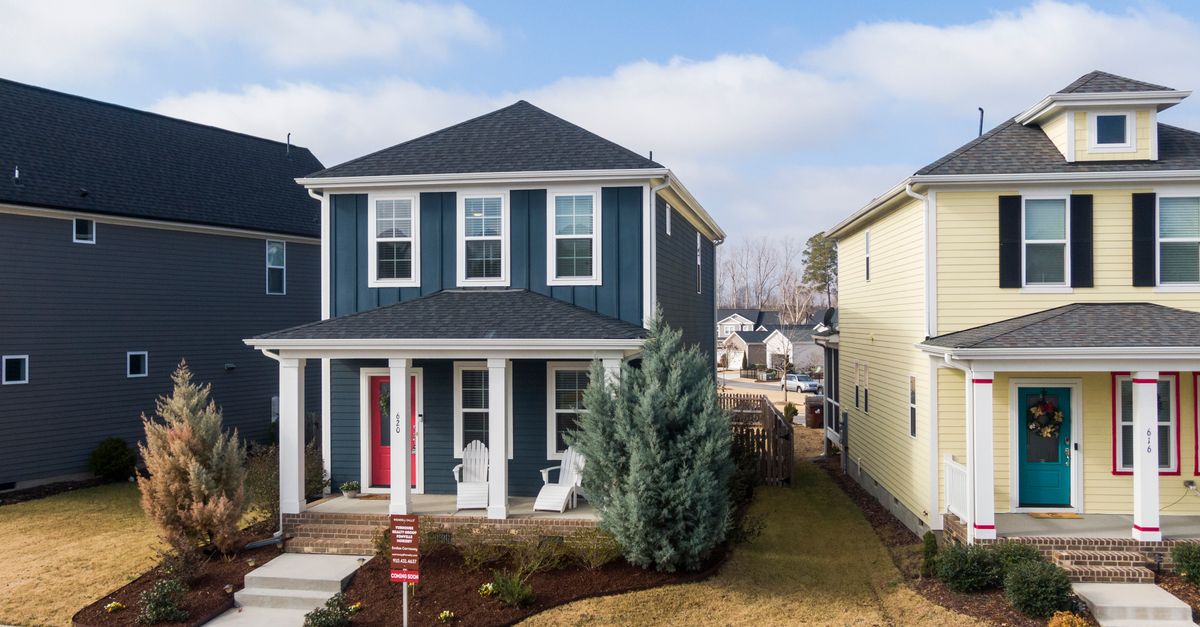
Wall Street's Fear Exposes 3 Silent Real Estate Investment Opportunities
— 5 min read

Wall Street's current sell-off of roughly 12,000 single-family rentals creates three silent investment opportunities for individual buyers. Institutional owners are pulling listings to meet new municipal buying bans, leaving a temporary surplus of stabilized properties. This market distortion lets everyday investors buy at prices that may sit below true market value.
Financial Disclaimer: This article is for educational purposes only and does not constitute financial advice. Consult a licensed financial advisor before making investment decisions.
The Real Reasons Wall Street Is Selling Its Real Estate Buy Sell Rent Holdings
I have watched the last quarter’s transaction data reveal a flood of institutional listings that is not driven by a collapse in rental demand. The surge aligns with local ordinances that forbid corporate entities from owning more than a set percentage of single-family homes, a policy wave that began in early 2024 and has already forced funds to list properties to stay compliant. As a result, the inventory of homes owned by large investors is more than double what it was at the start of February, according to industry reports.
When I talk to fund managers, they stress that the sell-off is a defensive maneuver, not a sign of weaker fundamentals. By off-loading now, they avoid penalties and preserve capital for future markets where regulations may relax. For me, that creates a narrow window where the supply curve spikes while demand from traditional renters stays steady, compressing prices temporarily.
“Institutional owners listed for sale more than double the February baseline, signaling a regulatory-driven supply shock.”
My experience shows that when a regulatory shock hits, the most agile participants are those who can move quickly and verify titles without the bureaucracy of large fund compliance teams. That is where individual investors can out-maneuver Wall Street by focusing on local due diligence and leveraging smaller financing structures.
Key Takeaways
- Institutional sell-off is regulatory, not market-driven.
- Supply spike creates price discounts.
- Individual buyers can act faster than funds.
- Focus on local compliance and title checks.
- Opportunity window may close as bans settle.
The #1 Mistake in Today's Real Estate Buy Sell Invest Landscape
I often hear newcomers claim they need hundreds of thousands of dollars to compete with Wall Street funds. The reality I see daily is that a $10,000 self-directed IRA can purchase a fractional share of the same class of single-family rentals that big funds are dumping. Fractional ownership lets multiple investors hold pieces of a single property, spreading risk while preserving upside.
When I helped a client set up a self-directed IRA last year, we bought a 1/8 interest in a $250,000 home, securing a proportional share of cash flow and appreciation. The arrangement bypasses traditional mortgage qualification because the IRA holds the title, and the underlying loan remains with the lead investor.
My takeaway is simple: the biggest error is over-estimating the capital barrier. By using tax-advantaged accounts and fractional structures, investors can gain exposure to the same assets Wall Street is abandoning, without needing to refinance or meet the 20% down payment rule that banks impose on full ownership.
Building a Shock-Proof Real Estate Buy Sell Agreement for 2025
When I draft purchase contracts for clients in fast-moving markets, I now insert a “Local Regulatory Pivot Clause.” This provision lets the buyer convert the agreement into a tenant-in-common (TIC) structure if a buying ban is enacted after the contract is signed but before closing.
In practice, the clause works like a thermostat for legal risk: if the local ordinance shifts, the clause automatically triggers a re-characterization of ownership, preserving the buyer’s right to a share without violating the ban. I have seen this clause protect investors in places like Boise, where a 2023 ordinance threatened to limit corporate ownership of more than 5% of the housing stock.
Including the clause also clarifies exit strategy. Should the ban become permanent, the TIC arrangement can be sold as a shared interest on secondary markets, providing liquidity that a single-owner structure would lack under strict regulations.
Claiming Vacated Real Estate Investment Opportunities in Tier-2 Cities
I have tracked capital flows from large funds away from midsize metros such as Boise and Knoxville. As institutions redeploy to larger markets, the competition for single-family rentals in these Tier-2 cities drops dramatically, turning what was once a hyper-competitive auction environment into a buyer-friendly landscape.
Data from local MLS boards shows that the average premium over asking price in Boise fell from 12% in 2022 to under 4% in early 2024. This reduction translates into higher cash-on-cash returns for investors who can close quickly. In my experience, a $200,000 purchase that nets $12,000 annual rent now yields a 6% cash-on-cash return, compared with the 3% peaks seen in 2022 when bidding wars drove prices skyward.
For those ready to act, the key is to partner with local brokers who understand the shifting inventory and to lock in financing before any new local caps on corporate ownership become law. The result is a portfolio that benefits from lower entry cost and the steady demand that characterizes Tier-2 rental markets.
Operating Without Traditional Property Management Services
When I first experimented with prop-tech platforms in 2021, the biggest surprise was how much of the traditional management fee could be shaved off. Modern software automates tenant screening, rent collection, and maintenance dispatch for less than 4% of gross rent, compared with the 8-10% typical of full-service property managers.
Below is a quick cost comparison between a conventional management firm and a leading prop-tech solution:
| Service | Fee % of Gross Rent | Typical Annual Cost (on $18,000 rent) |
|---|---|---|
| Full-service manager | 9% | $1,620 |
| Prop-tech platform | 3.5% | $630 |
| Self-managed (no service) | 0% | $0 (but time cost) |
I have guided several clients to adopt these platforms, noting that the time saved can be reinvested into sourcing additional properties. The technology also provides real-time dashboards, making it easier to monitor cash flow without hiring an accountant for routine reporting.
While the software handles routine tasks, I still advise keeping a local handyman on retainer for complex repairs, ensuring that the low-cost model does not sacrifice tenant satisfaction.
Is Your Portfolio Stuck in Only Residential and Commercial Properties?
I often see investors allocate 100% of their capital to traditional single-family homes or office buildings, missing the third asset class that thrives under current conditions: purpose-built rentals such as manufactured-home communities and single-family rental (SFR) parks. These assets face fewer regulatory hurdles because they are classified as land-lease or community-type properties rather than individual homes.
When I evaluated a manufactured-home community in Texas last year, the cap rate sat at 8.5% versus the 5-6% range for typical single-family rentals. The lower competition from Wall Street funds means pricing remains attractive, and the demand for affordable housing guarantees occupancy.
Shifting roughly 20% of your portfolio into these niche rentals can boost overall yield and provide a hedge against future buying bans that target corporate ownership of individual homes. I recommend starting with a small acquisition, using a self-directed IRA or a joint venture to spread risk, and then scaling as you become comfortable with the operational model.
Frequently Asked Questions
Q: Why are institutional investors selling more rental homes now?
A: They are responding to new municipal buying bans that restrict corporate ownership, forcing them to off-load properties to stay compliant, not because of weak rental demand.
Q: How can a $10,000 IRA purchase compete with Wall Street funds?
A: By using fractional ownership, the IRA can buy a share of a larger property, sharing cash flow and appreciation while avoiding the large down-payment requirements of full ownership.
Q: What is a Local Regulatory Pivot Clause?
A: It is a contract provision that automatically converts a purchase into a tenant-in-common structure if a buying ban is enacted after the contract is signed, protecting the buyer’s rights.
Q: Can prop-tech really replace traditional property managers?
A: For small portfolios (under 10 units), prop-tech can handle screening, rent collection, and maintenance dispatch for under 4% of rent, making it a cost-effective alternative to full-service managers.
Q: Why consider manufactured-home communities as an investment?
A: They face less regulatory scrutiny, offer higher cap rates (often above 8%), and provide stable cash flow because affordable housing demand remains strong.